
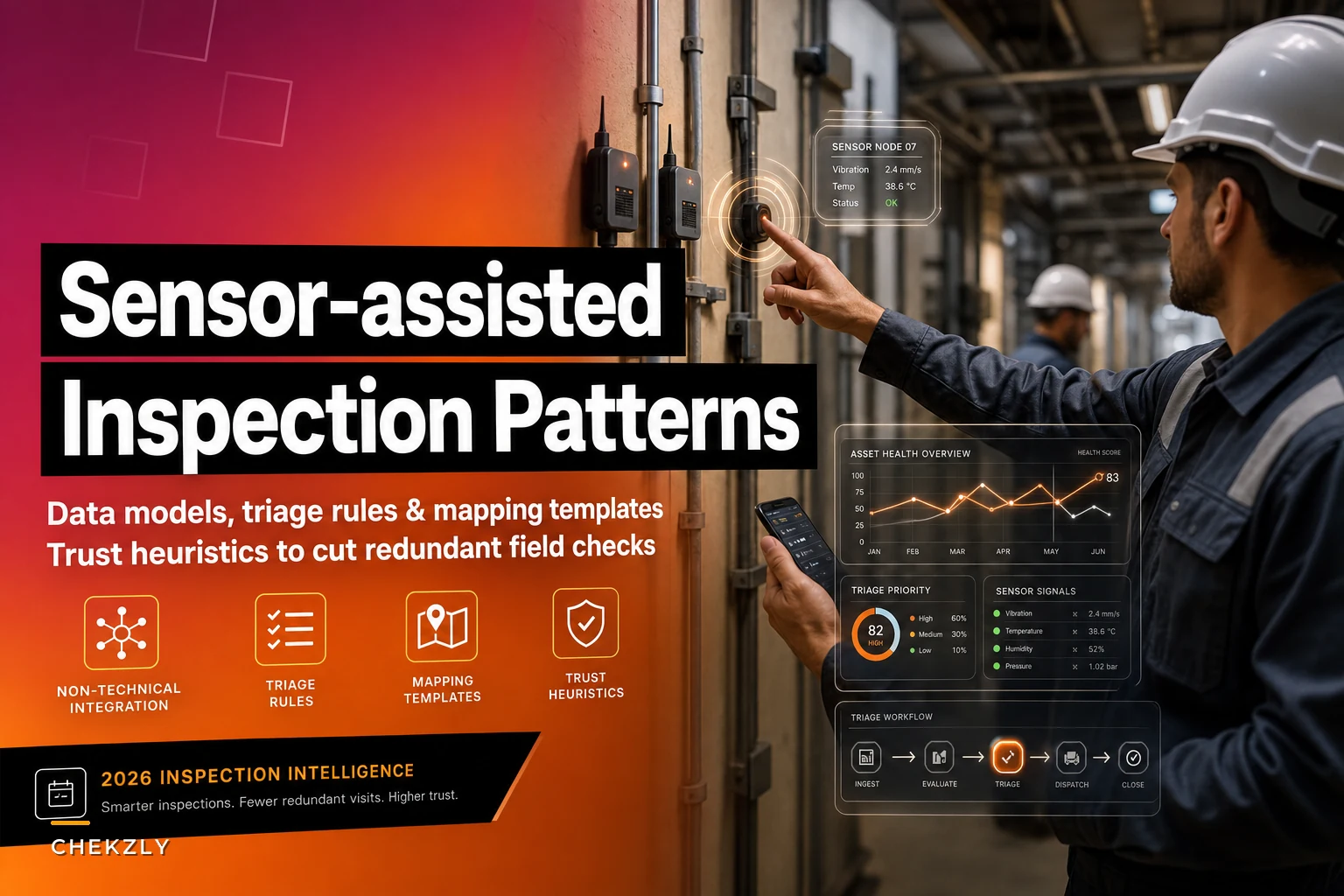

Sensor integration in inspections creates a fundamental operational problem that most teams don't anticipate: deciding when to trust remote data versus field observations. This isn't about technology failing—it's about creating clear decision rules for when human judgment overrides automated readings.
The confusion typically starts during the first month of sensor deployment. Temperature sensors show 68°F in a cold storage unit, but the inspector finds frost damage on stored materials. Vibration monitors indicate normal equipment operation, yet visible wear patterns suggest otherwise. Moisture readings come back clean while water stains spread across ceiling tiles.
These contradictions destroy team confidence and create inspection paralysis. Field teams start ignoring sensor data entirely, defeating the purpose of the integration. Or worse, they blindly trust readings and miss critical issues that only visual inspection catches.
Why sensor-field conflicts happen constantly
The root cause isn't sensor malfunction—it's placement and context blindness. A temperature sensor mounted near a heating vent reads differently than ambient room temperature. Vibration monitors attached to mounting brackets miss resonance in connected equipment. Moisture sensors positioned at standard heights miss leaks traveling along unexpected paths.
Environmental factors compound these issues. HVAC cycles create temporary readings that don't reflect average conditions. Equipment startup sequences trigger alerts during normal operations. Seasonal changes alter baseline readings without actual problems developing.
Calibration drift adds another layer. Sensors that read accurately during installation gradually shift over months. A 2-degree temperature drift seems minor until it pushes readings across critical thresholds. Vibration sensors lose sensitivity, missing early warning signs of bearing failure.
Most inspection programs lack clear rules for handling these discrepancies. Teams waste hours investigating false positives or, after too many false alarms, start ignoring legitimate warnings.
Building triage rules that actually work
Effective sensor integration for inspections requires explicit decision trees, not vague guidelines about "using judgment." The most successful programs use a three-tier triage system based on consequence severity and sensor reliability patterns.
Eliminate inspection delays and errors.
Chekzly helps you plan, execute, and document inspections efficiently and accurately.
- Real-time inspection tracking
- Automated report generation
- Compliance and checklist management
No credit card required
Tier 1: Always verify with field inspection
-
Safety-critical readings (gas detection, structural vibration)
-
Sensors in known problem areas
-
First-time alerts from any sensor
-
Readings near regulatory thresholds
-
Contradictory readings from paired sensors
Tier 2: Remote verification sufficient
-
Routine readings within normal ranges
-
Sensors with consistent accuracy history
-
Multiple sensors confirming same condition
-
Visual verification possible through cameras
-
Non-critical comfort parameters
Tier 3: Batch verification during scheduled rounds
-
Trending data without immediate concerns
-
Backup sensors confirming primary readings
-
Historical patterns matching expectations
-
Low-consequence parameters
-
Areas with redundant monitoring
A facilities management company managing 47 retail locations implemented this framework after struggling with 200+ daily sensor alerts. They reduced unnecessary site visits by roughly 60% while catching two legitimate HVAC failures that previous random responses would have missed.
Track first-time alerts separately to calibrate location-specific sensor confidence.
Teams track when sensor readings prove accurate versus when field inspection contradicts them, building location-specific confidence scores.
Sensor data models that reduce inspection redundancy
The biggest operational gain from sensor integration comes from eliminating redundant inspections—but only with the right data structure. Most teams dump sensor readings into spreadsheets without considering how inspectors actually use this information.
Effective integration requires mapping sensor data to inspection workflows, not just collecting readings. Consider a typical HVAC inspection checklist with 15 items. If temperature and humidity sensors can reliably verify 5 of those items, that's a 33% reduction in field verification time—but only if the data maps cleanly to the checklist structure.
| Inspection Item | Sensor Coverage | Confidence Level | Verification Rule |
|---|---|---|---|
| Temperature within range | Full - continuous monitoring | High (95%) | Field verify only if out of range |
| Humidity levels acceptable | Full - continuous monitoring | High (93%) | Field verify monthly + alerts |
| Equipment running | Partial - vibration only | Medium (75%) | Visual check for unusual sounds |
| Filter condition | None | N/A | Always field inspect |
| Drain pan clear | Indirect - moisture sensor nearby | Low (45%) | Always field inspect |
This mapping immediately shows which inspections can rely on sensors versus requiring field visits. Teams stop sending inspectors to check temperatures that sensors monitor continuously. But they also know exactly when human verification remains essential.
The confidence levels come from actual correlation data—tracking when sensor readings matched field observations over time. A moisture sensor near drain pans might only catch 45% of clogs because water follows unpredictable paths.
Common sensor types and their inspection limitations
Temperature sensors work well for ambient monitoring but miss localized hot spots. A warehouse might show 72°F average temperature while products near loading docks experience 15-degree swings during deliveries. Inspectors catch these micro-climate issues that fixed sensors miss.
Vibration monitors excel at detecting bearing failure patterns but struggle with belt tension or alignment issues. An inspector noting belt dust accumulation provides early warning that vibration sensors won't detect until significant wear occurs.
Moisture sensors catch active leaks but miss early signs like discoloration or mineral deposits. They also generate false positives from condensation during temperature swings. Field inspection identifies the difference between problematic moisture and normal HVAC condensation.
Pressure sensors in compressed air systems track overall system health but can't identify specific leak locations. An inspector with an ultrasonic detector finds the actual leak points that pressure monitoring only suggests exist.
Motion sensors for security inspections seem comprehensive until you realize they miss tampering with windows, locks, or access panels. Human inspection catches security vulnerabilities that motion detection never will.
A regional property management firm learned this lesson after relying too heavily on motion sensors for vacant unit inspections. Vandalism damage accumulated for weeks because spray paint and broken fixtures didn't trigger motion alerts. They now use sensors to optimize inspection routing but maintain visual verification schedules.
Creating inspection schedules that blend sensor and field data
The real power of sensor integration appears when you stop thinking about sensors versus inspections and start designing blended workflows. This means using continuous monitoring to adjust inspection frequencies dynamically rather than replacing inspections entirely.
Traditional scheduling might require monthly HVAC filter inspections across all units. With differential pressure sensors, you inspect only when pressure drop indicates filter loading. Some filters last 6 weeks, others 12, depending on usage patterns. This targeted approach reduces unnecessary filter inspections by about 40% while catching needed replacements faster.
Pure sensor-driven scheduling fails when applied blindly. A manufacturing client tried eliminating visual equipment inspections in areas with comprehensive vibration monitoring. They missed developing cracks, loose mounting bolts, and oil leaks—all critical issues vibration sensors don't detect. The solution was alternating sensor-driven and visual inspection cycles, maintaining safety while reducing redundancy.
The most effective pattern follows a risk-adjusted hybrid model. Risk scoring methodologies determine baseline inspection frequency. Sensor data then modifies these schedules within acceptable ranges. A high-risk area might vary between weekly and bi-weekly inspections based on sensor trends, but never extends beyond two weeks regardless of readings.
Visualized workflow:
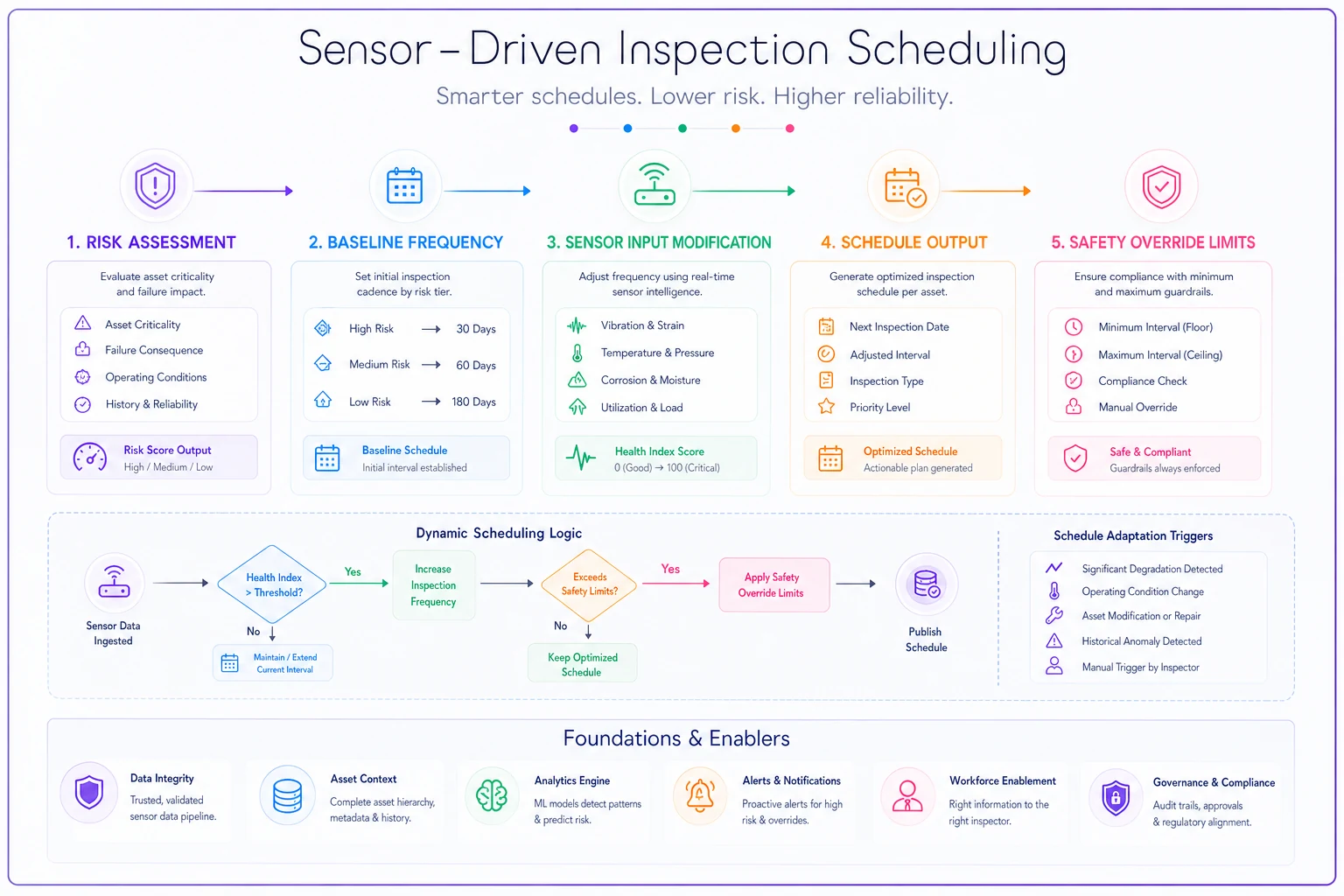
The decision points in this workflow prevent dangerous gaps. Sensor data can accelerate inspections when issues emerge or defer routine checks when systems run clean, but regulatory and safety minimums always apply.
Workflow patterns that prevent sensor-inspection conflicts
The most frustrating sensor integration failures happen when field teams and monitoring teams work from different playbooks. The monitoring team sees normal readings and marks areas clear. Field inspectors find problems and lose trust in the entire sensor system.
Pre-inspection review means inspectors check recent sensor trends before site visits. This isn't about biasing their observations but understanding what sensors indicate. An inspector seeing normal vibration readings but hearing unusual equipment sounds knows to investigate mounting points or external factors sensors might miss.
Field verification protocols specify how to handle sensor-inspection conflicts. Rather than just noting "sensor wrong," teams document specific discrepancies. Was the sensor reading technically accurate but misleading? Did environmental factors affect readings? Is sensor placement creating blind spots?
Post-inspection reconciliation closes the feedback loop. When field observations contradict sensors, teams investigate why and adjust either sensor placement, calibration, or confidence ratings.
A multi-site retail chain implemented this workflow after repeated conflicts between energy management sensors and field observations. Store managers complained about comfort issues while sensors showed acceptable ranges. The reconciliation process revealed sensors placed near returns missing hot spots where customers actually stood. Relocating just 20% of sensors eliminated 80% of comfort complaints while maintaining energy efficiency targets.
Preventing these conflicts requires ongoing communication between monitoring and field teams and a documented reconciliation process.
Mapping templates for rapid sensor integration
Rather than building sensor mapping from scratch for each inspection type, successful programs start with templates covering common scenarios.
Basic environmental monitoring template:
-
Primary sensor
Temperature/humidity at breathing height
-
Secondary validation
Surface temperature at problem areas
-
Inspection override triggers
Occupant complaints, visible condensation, unusual odors
-
Confidence adjustments
-20% during season transitions, -30% near exterior walls
Rotating equipment template:
-
Primary sensor
Vibration at bearing points
-
Secondary validation
Temperature at motor housing
-
Inspection override triggers
Visible wear, unusual sounds, oil traces
-
Confidence adjustments
-15% during startup/shutdown, -40% for belt-driven equipment
Leak detection template:
-
Primary sensor
Moisture at low points
-
Secondary validation
Humidity trends in enclosed spaces
-
Inspection override triggers
Staining, corrosion, musty odors
-
Confidence adjustments
-25% near HVAC equipment, -50% in basements
These templates provide starting points, not rigid rules. A pharmaceutical warehouse might adjust environmental monitoring for tighter tolerances. A food processing plant might add bacterial growth risk factors to leak detection templates.
Teams modify templates based on actual facility conditions rather than guessing at sensor-inspection relationships. This typically cuts integration time from months to weeks while avoiding common mistakes.
The key is documentation. Every template modification gets recorded with the reasoning behind it, building institutional knowledge that survives staff turnover.
When to override sensor data completely
Some situations demand ignoring sensor data entirely, regardless of readings.
Regulatory inspections often require human verification regardless of sensor data. An inspector must physically check fire extinguisher gauges even if pressure sensors show normal readings. Food safety inspections require visual verification even with continuous temperature monitoring. These requirements aren't negotiable—sensors supplement but don't replace mandated human inspection.
Post-incident reviews need human assessment beyond sensor data. After equipment failure, sensors might show return to normal operations. But inspectors identify stress patterns, premature wear, or installation issues that sensors miss.
Seasonal transitions create sensor reliability gaps. The first heating season startup generates numerous false readings as systems adjust. Spring humidity changes trigger moisture alerts from condensation rather than leaks. During these periods, field inspection takes precedence over sensor alerts.
New installation periods require human verification until sensor baselines establish. The first 30-90 days of sensor operation often produce unreliable patterns as equipment settles and calibration refines.
A hospital facilities team learned this lesson after trusting new differential pressure sensors in isolation rooms. Readings showed proper negative pressure, but door seal failures allowed air exchange sensors couldn't detect. They now require manual smoke tests for 60 days after sensor installation, regardless of readings.
Knowing when to completely override automation protects against the dangerous assumption that sensors catch everything. They don't. Human observation remains critical for context, unusual situations, and failure modes sensors weren't designed to detect.
Software platforms that unify sensor and inspection data
The operational challenge isn't just collecting sensor and inspection data—it's making both accessible in workflows that field teams actually follow. When sensor dashboards live separately from inspection checklists, teams constantly switch between systems, missing critical correlations.
Effective integration requires platforms that treat sensor data and inspection observations as complementary inputs to the same operational picture. This means inspection forms that automatically populate recent sensor readings, letting inspectors see trends before arriving on-site. It means sensor alerts that link directly to relevant inspection protocols, not just sending generic "check this" messages.
Multi-site inspection programs particularly benefit from unified platforms. A regional manager overseeing 30 locations can see which sites have sensor anomalies requiring priority inspection without checking multiple dashboards. Field teams get pre-populated forms showing which sensor-monitored items need minimal verification versus detailed inspection.
The automation aspect becomes valuable when handling the volume of sensor-inspection correlations. AI-powered platforms can identify patterns humans miss—like temperature sensors that consistently read 3 degrees high after rainy days, or vibration monitors that spike during nearby construction. These patterns inform inspection scheduling without manual analysis of thousands of data points.
More importantly, unified platforms eliminate duplicate data entry that kills field adoption. Inspectors shouldn't transcribe sensor readings they can see on their phones. They shouldn't file separate reports for sensor validation versus standard inspection items.
A commercial property portfolio implemented this unified approach after inspectors complained about checking four different systems per building visit. The integrated platform reduced inspection time by 25% while improving issue detection. Inspectors spent less time managing data and more time observing actual conditions—exactly what human inspection excels at.
The software becomes an enabler rather than another burden. It surfaces the right sensor context when inspectors need it, automates the correlation tracking that builds confidence over time, and maintains the audit trails that regulatory compliance demands.
Making sensor integration work without the complexity
Sensor integration doesn't require complex algorithms or expensive consultants. It requires clear operational rules about when to trust remote monitoring versus field observation. The teams that succeed focus on practical patterns: specific triage rules, realistic confidence levels, and workflows that blend both data sources effectively.
Start with the three-tier triage system for handling sensor alerts. Map your existing inspection items to sensor capabilities using the templates provided, adjusting confidence levels based on actual field correlation. Create clear override rules for when human inspection takes precedence. Build workflows that prevent sensor-inspection conflicts through pre-review and post-reconciliation.
Treat sensor integration as an enhancement to human inspection, not a replacement. Sensors excel at continuous monitoring and trending. Humans excel at context, investigation, and catching issues sensors weren't designed to detect.
Implement these patterns incrementally. Start with one facility or one inspection type. Track correlation between sensor and field data for 60-90 days. Adjust confidence levels and triage rules based on actual results. Then expand to additional locations or inspection types using lessons learned.
This measured approach builds team confidence while avoiding the sensor integration failures that plague rushed deployments. Your inspectors learn when to trust remote monitoring. Your management gets the efficiency gains from reduced redundant inspections.
The operational software platforms that support this integration become force multipliers, not because they're sophisticated, but because they make the human-sensor collaboration natural. They put sensor context where inspectors need it, automate the tedious correlation work, and maintain clear audit trails showing when and why human judgment overrode automated monitoring.
Sensor integration actually improves inspections not through blind automation, but through thoughtful combination of continuous monitoring and experienced human observation. The data tells you where to look closer. The inspector tells you what it means.
Ready to modernize your inspection process?
Join 500+ inspection teams using Chekzly to reduce paperwork, improve compliance, and accelerate reporting.